Art Classes in School What Is the Monomer of a Protein
The PDB Art projection aims to make science more accessible and inspire immature people to explore the beauty of proteins past bringing together art and science.
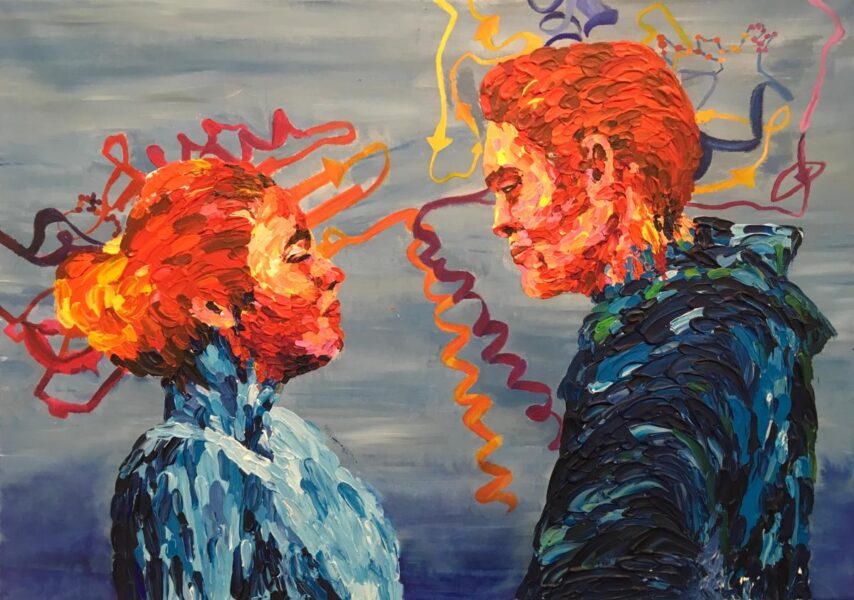
PDBe/EMBL-EBI
The Protein Information Bank in Europe (PDBe) celebrated its 5th edition of the PDB Art project in Dec 2020. This initiative brings together art societies, school children, arts and science departments, scientists, and members of the PDBe squad. This collaborative effort inspires school students to create artworks based on proteins – life's building blocks – while introducing them to the world of structural biology. Not just practice students create truly outstanding pieces of fine art, merely they also provide a wider perspective of the touch on of scientific discipline upon society through their thoughtful estimation of the chosen poly peptide or topic of interest.
Nosotros highly recommend that fine art and science departments piece of work together collaboratively, every bit this tends to give more successful project outcomes. Although this method requires greater strategic planning, the involvement of both scientific discipline and fine art teachers helps to provide expertise across both subject areas and leverage the interdisciplinary nature of the projection.
An case of this collaborative approach was adopted past teachers from Thomas Gainsborough School in Suffolk, UK, where the fine art and science departments worked together to develop materials for art and science lessons. The Thomas Gainsborough Schoolhouse have kindly allowed us to share these materials, which are available from the PDB Art Resources folio.
If a collaboration is non possible, schools tin can run the projection inside individual subject lessons, and the PDBe team can provide scientific support. Alternatively, it is possible to involve local scientific staff, for example, through Stalk hubs, or local equivalents, and local university networks.
How is the PDB Art projection structured?
The PDB Fine art projection timelines are aligned with the academic school twelvemonth; however, there is a large amount of flexibility to support involvement in the project. Participating pupils come from a range of different year groups, from yr vii (11–12 years old) to year 12 (16–17 years onetime), assuasive the project to be run in a classroom setting or as a more independent research project. Choosing the year grouping depends on the schoolhouse and is at the instructor'south discretion. The PDB Art project has three phases: learning phase, cosmos and submission stage, and celebration phase. Aid and support from the PDBe is provided throughout, if needed. The project timelines and details are shown below.
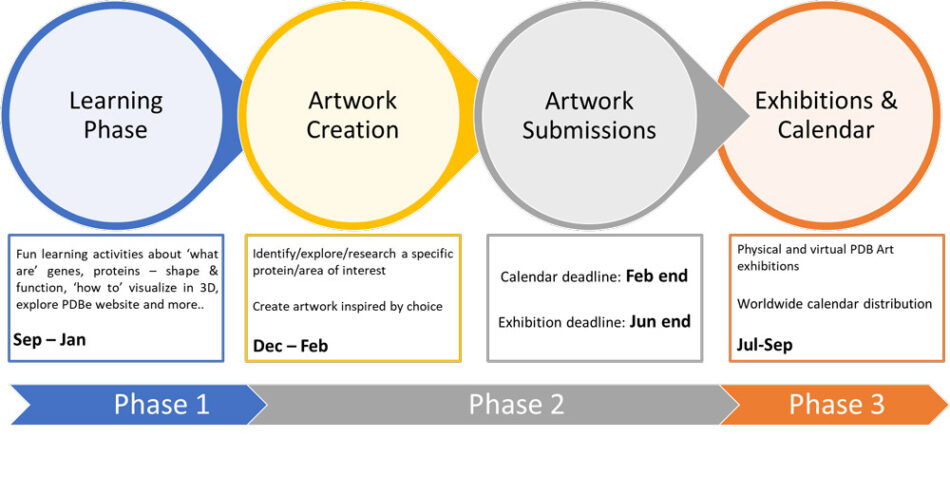
Stage 1 – Learning and thought evolution

Image courtesy of Ben Keeble/The Perse School/Cambridge/UK
The PDB Fine art project starts with the learning phase, where students learn, explore, and gain an understanding of protein construction and role, which tin can be accomplished past using PDBe activities or following the normal schoolhouse curriculum and supplementing it with the PDBe resource listed below. All these activities and resources have been put together past PDBe scientists to support learning and build interest and confidence in agreement protein structures.
Activity i – Office finders
Through this activity, students will larn about the concept of genes and how they encode proteins.
Materials
- Printed handouts for the function finders activity
- YourGenome translation/transcription video, as an initial introduction
- The provided PowerPoint presentation for teachers
Procedure
- The PowerPoint presentation provides an outline for teacher on how to run the activity and gives details of each of the proteins establish in the Protein Profiles booklet.
- Students are provided with their ain Deoxyribonucleic acid sequence and codon cycle printed sheets. Using the codon bicycle, students translate a DNA sequence into the representative poly peptide sequence. This helps them to empathise the processes of transcription and translation.
- Students then use the Poly peptide Profiles booklet to find 'their' protein and acquire more about its part, for example, learn about bioluminescence by looking at the luciferase enzyme found in fireflies and other bioluminescent organisms.
- Finally, students utilize the PDBe structure link on the worksheet to access the 3D view of the protein structure on a telephone, tablet, or computer.
Action two – Exploring protein structure
Materials
- A set of videos prepared by PDBe to help students the importance of proteins
- 3D modelling kit (recommended)
Procedure
- Students should sentinel the videos to understand the importance of proteins in our everyday life.
- Using the amino acrid starter kit, students are given a protein 'toober' and amino acid clips. They add amino acids randomly onto the toober. Post-obit the properties of amino acids on the accompanying amino acid board, students fold up the protein toober into a 3D shape.
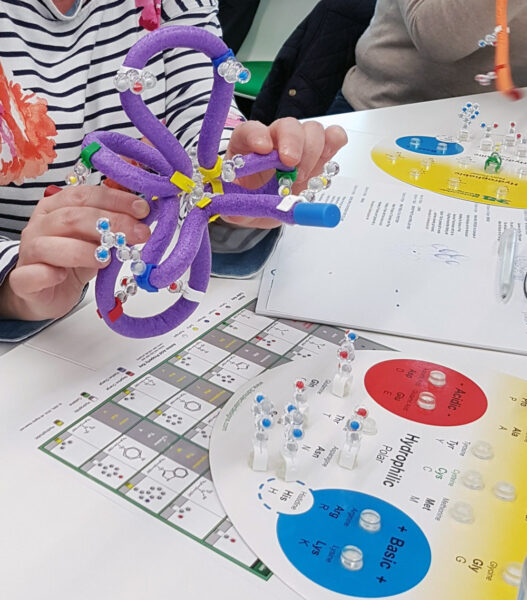
Image courtesy of Deepti Gupta
At PDBe, we have a pick of kits (Water Kit, Enzymes in Action Kit, Substrate Specificity Kit, Flow of Genetic Information Kit, Amino Acid Starter Kit and Protein-Folding Kit) available to lend out, although availability depends on demand.
Action three – Using the PDBe website and choosing a protein
In textbooks, proteins are often shown as 2D images, and while this can be a good way to understand the basic principles, proteins truly come alive when seen in 3D. Seeing how they are arranged and collaborate in 3D gives a fascinating insight into the tiny globe of these biological molecules, similar the spike protein from the SARS-CoV-2 virus shown below.
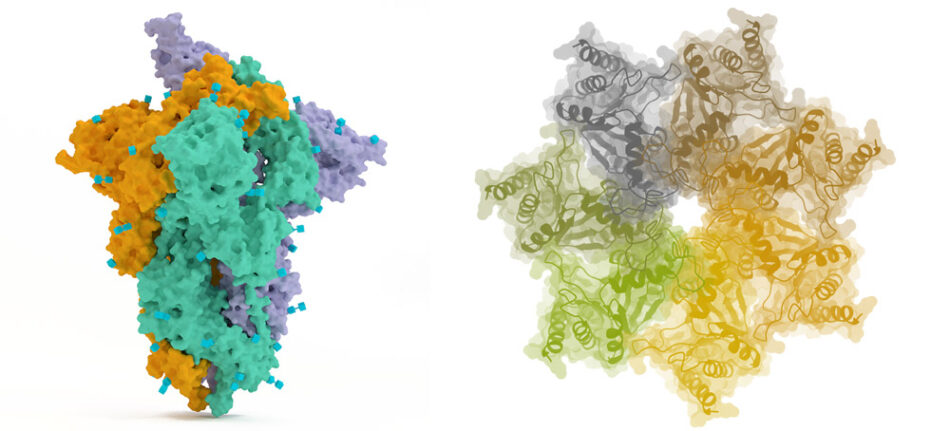
Image courtesy of Deepti Gupta and David Armstrong
Materials
- Introductory worksheet
- Pinterest activity worksheet
- Computers/tablets
Procedure
- Students should work through the introductory worksheet, which guides students through using the PDBe website. This volition allow them to explore and visualize biomolecules in 3D and learn about their functions.
- They should and so use the PDBe website to search for known proteins, such as insulin or haemoglobin.
- Students should so explore different proteins and choose a 'protein of interest' for their fine art project. The difficult part is narrowing down their options and choosing merely ane of the interesting structures to investigate from the thousands available!
- Students tin can take a look at our featured structure articles for some more ideas. They can even travel back in time and view structures originally determined back in the 1970s.
- To aid students decide which proteins to focus on, the PDBe has created a dedicated PDB Fine art Pinterest account, providing ideas for specific proteins and scientific topics. Students should utilise the Pinterest action worksheet to guide them through finding proteins of interest and learning how to view the structure in 3D using the PDBe website. Students acquire to visualize proteins in 3D and come across them in unlike forms.
Phase 2 – Creating art from poly peptide structures
From the activities above, students brand an informed choice for their protein of interest and move on to the art projection, where they create an artwork with support from their teachers.
The choice of the type of artwork has no prescription. This flexibility gives students the freedom to visualize and explore new forms of fine art and be more than innovative in their representations. It too provides a more accessible and unique arroyo to learning the scientific concepts. Every bit Albert Einstein in one case said, "The greatest scientists are artists as well. Arts and sciences are branches of the same tree".
Paintings, drawings, etchings, digital art, photograms, sculptures, textile pieces, ceramics, batik designs, and fifty-fifty a musical slice have been created and then far. All these tin exist explored on the PDB Art webpage.
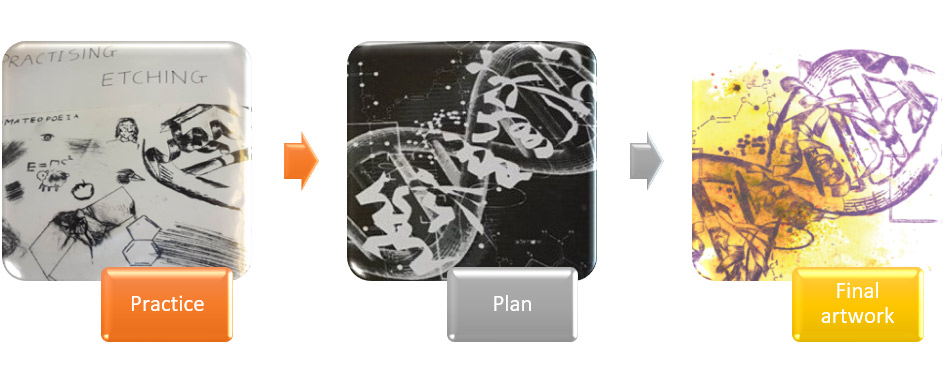
Image courtesy of Deepti Gupta and David Armstrong
Materials
- Art supplies
- Computers/tablets for research and viewing of 3D structures
Procedure
- Students should read almost the function of their called protein, explore available structures at the PDBe, and sympathize its importance in biological science and club.
- Students should then generate ideas for an artwork and start working on their piece.
- Towards the finish of this process, they should write accompanying descriptions for their artwork, explaining which protein they were inspired by, why they found it interesting/important, how they represented it, and what media they chose.
- Students may as well provide video interviews explaining the background of their artwork and what inspired them to create the slice.
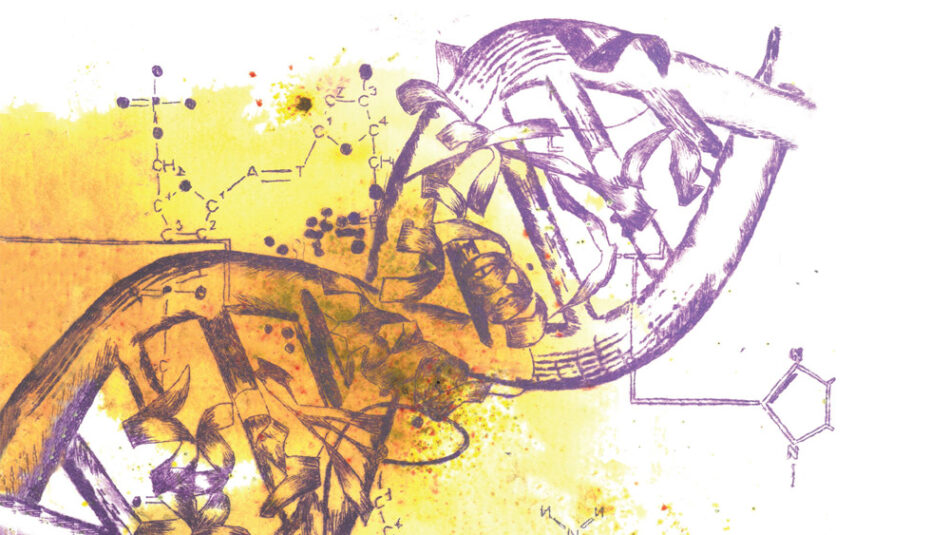
A loftier-resolution digital re-create of the artwork and description should be submitted to the PDBe by the stop of February for consideration for the yearly PDBe calendar. All artwork created past students should exist submitted electronically by the end of June for consideration for the PDB Art exhibition.
Phase three – Celebrating the artworks
One of the key stages of the projection is sharing the artworks with the public and with scientists around the world, through exhibitions and other methods. The PDBe hosts public art exhibitions, both physically and virtually, to showcase and gloat these remarkable creations. The exhibition'south individual opening effect provides a platform to spark discussion and engagement amidst students, scientists, artists, and the public.
In addition, the annual PDBe calendar, featuring the artworks, is distributed worldwide, bringing creative interpretation back to the scientific community. In 2021, the PDB is celebrating 50 years of archiving structures of biological molecules with an anniversary edition of the calendar.

Image courtesy of Deepti Gupta and David Armstrong
PDBe calendars and artworks exhibited from previous years tin be explored on the PDB Art webpage.
How to go involved
The PDBe tin can assistance you lot get started with the PDB Art project and provide you with support in running activities at your own school.
If reading this article has inspired you to join the PDB Art project, so fill in the 'Expression of Interest' form or ship an e-mail to pdb-art@ebi.air-conditioning.uk.
We tin can and so discuss the project further with yous and introduce you to our community of teachers already running the projection.
Acknowledgements
The comprehend film for Issue 54 is based on the artwork by Lucy Kerr, Y12 student of Thomas Gainsborough Schoolhouse. The PDB id used for the artwork is 5F1S.
Resource
- Find out more near the PDB Art project.
- Detect more didactics materials on the PDB Art Resources page.
- Watch educatee testimonials and webinars on the PDBe YouTube channel.
- Read an introductory article on the PDB art projection: Gupta D, Armstrong D (2021) Introducing students to the beauty of biomolecules. Science in School 53.
- Detect how artificial intelligence is helping to predict protein folding: Heber S (2021) From gaming to cutting-edge biology: AI and the poly peptide folding problem.Science in Schoolhouse 52.
- Find out how art can be inspired by molecular biological science: Stroe O (2019) Art meets molecular biology.Scientific discipline in School 46:29–33.
- How tin can we meet proteins in activity? Wilson R (2021) Found solar power: unlocking the secrets of photosynthesis with 10-ray free-electron lasers. Science in School 54.
- Read most the background of structures highlighted on the PDB page.
Institution
EMBL
Review
Excellent ideas for interdisciplinary projects – learning nigh the importance of proteins and using the knowledge to inspire art creations.
The article could exist used to stimulate discussion about molecular biology and the importance of proteins as building blocks.
Marie Walsh, Science Lecturer, Ireland
Belum ada Komentar untuk "Art Classes in School What Is the Monomer of a Protein"
Posting Komentar